Skeleton
In search of our ‘eternal’ identity
In the Skeleton project, I am searching for our “eternal” identity, the identity that can tell something about who we were even after we die. During life, our external appearance is the most accessible and therefore the most important carrier for our unique identity. We recognize someone by their iris, their face or their unique fingerprint, but that outside does not yet give us a view of our inside and the skeleton that literally holds us up.
The skeleton as a symbol of death
The relationship we as humans have with our skeleton is twofold. On the one hand, the skeleton is tangible and near: we feel it every day and it gives us the ability to move. At the same time, the skeleton is the symbol of death, from which we want to stay as far away as possible when alive. Ultimately, therefore, our skeleton represents life rather than death. It is this metaphor that I want to be able to hold literally in Skeleton.
The symbol of death via a 3D copy
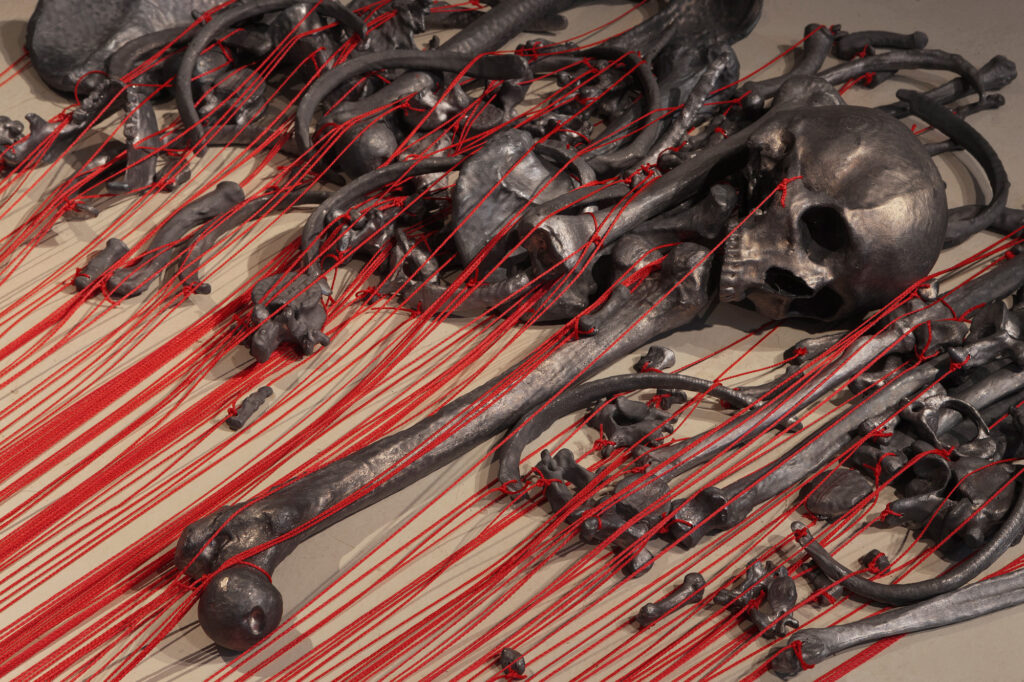
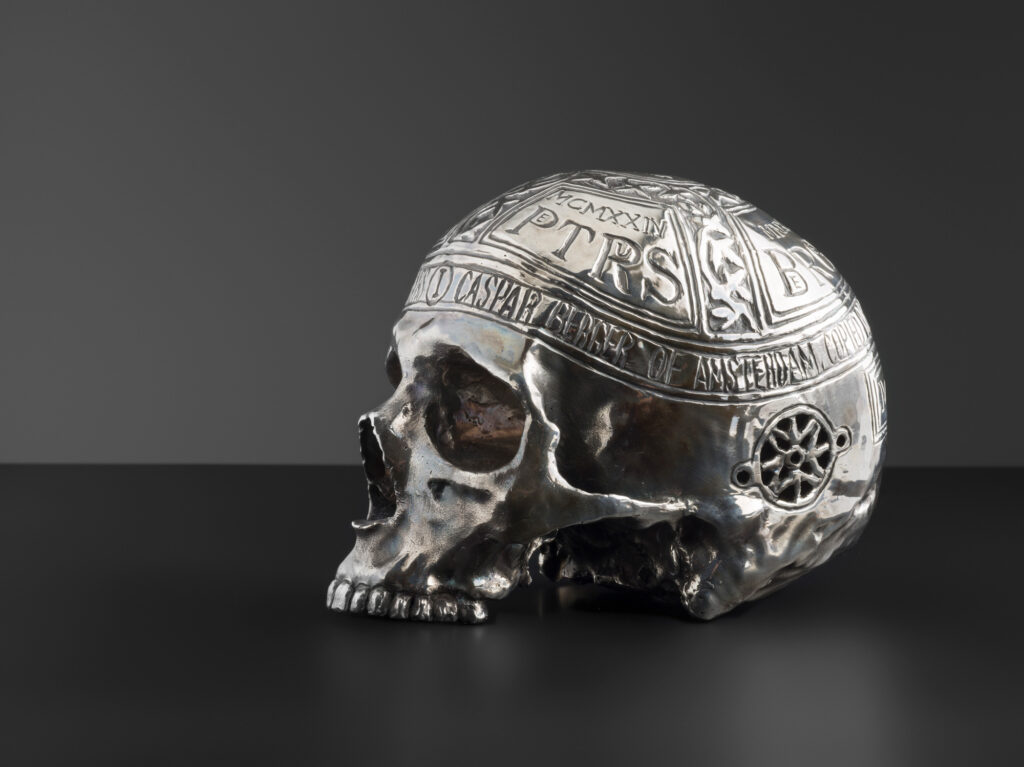
For Skeleton, I had an exact copy of my body made with a high-tech CT scanner. The digital information provided by this scan was then made suitable for reproduction by a 3D printer. This way I can still hold the symbol of my own death in my hands during my lifetime. This three-dimensional copy can be seen as “the true image,” the vera icon.
Modern version of the mirror portrait
Early Italian painters often used a mirror for their self-portraits, creating a Ritratto fallo al specchio or mirror portrait. Because I can have a reproduction of my own skeleton via 3D printing, the Skeleton project gives me new possibilities for the self-portrait. The ‘reflection’ is here – in the absence of an ‘effigy’ – part of a ‘construction’ and thus of one’s position and status as well as the recognition thereof.
Object and worship: the relic as self-portrait
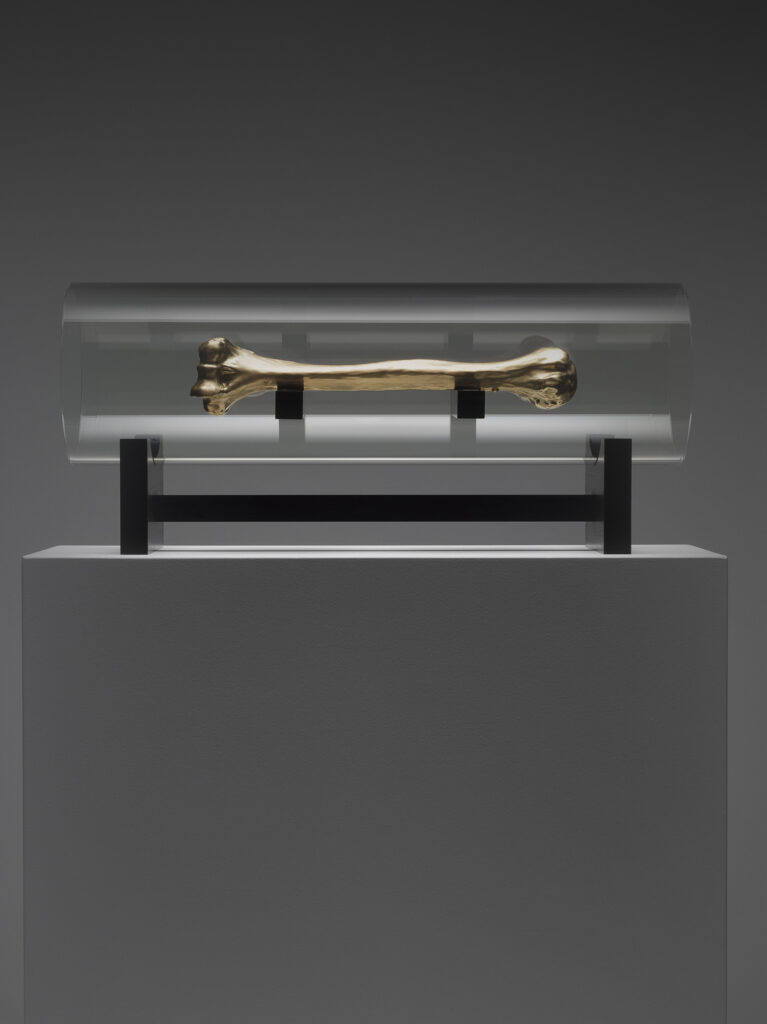
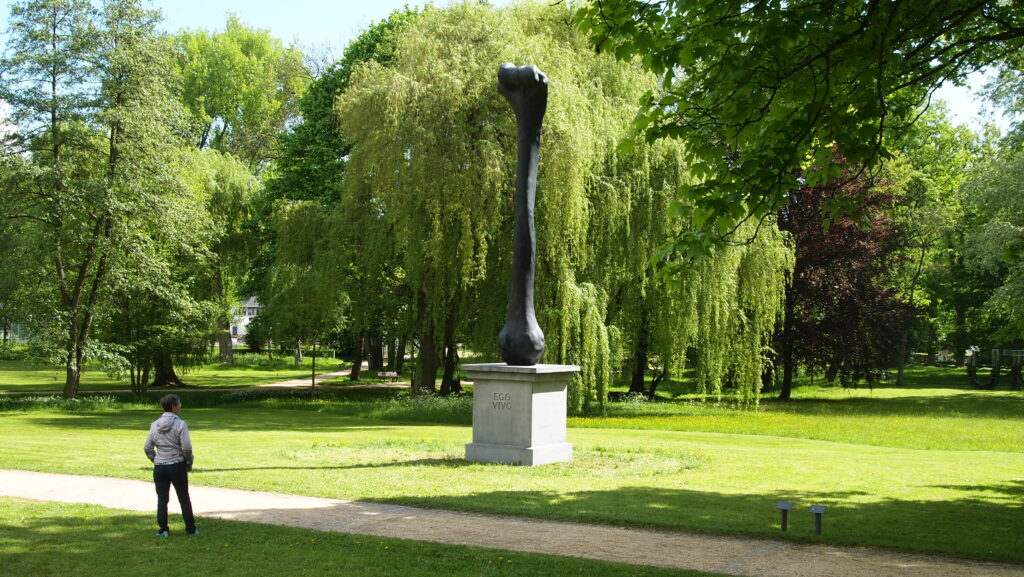
For example, in Skeleton / Self-Portrait 20, I use the phenomenon of the relic, focusing on the relationship between the object and its veneration. Strictly speaking, it is the worshipper who puts the power in the object, for the object itself has no intrinsic value. Skeleton / Self-Portrait 20 is a gold cast of the bone of my right upper arm (the humerus). This cast contains three kilograms of gold, which I used to move the value to the object itself. The relationship between viewer and artwork thus becomes part of a “construction.
Self-portrait via canonization
In Declaration of Sanctity / Self-Portrait 23, a notarized deed in which I declare myself holy provides the context and thus the necessary eloquence. In this work, a mirror portrait “emerges” where the viewer must determine where and how identity is added and subtracted.
Reconstruction by forensic anthropologist
In addition to the aforementioned “metaphorical constructions” of identity, scientific forensics also provides the opportunity for reconstruction. With Skeleton / Self-Portrait 21, I wanted to explore the possibilities of “forensic reconstruction” and redefine the concept of self-portrait. A forensic anthropologist anonymously received a 3D copy of my skull (true image “vera icon”) and based on this, created a reconstruction of my face based on the available scientific documentation on tissue structure, skin thickness and muscle groups. The reconstruction in clay was then cast in bronze so that it could be presented as Skeleton / Self-Portrait 21. Paradoxically, this is a “self-portrait” not made by the artist himself.
In search of our ‘eternal’ identity
In the Skeleton project, I am searching for our “eternal” identity, the identity that can tell something about who we were even after we die. During life, our external appearance is the most accessible and therefore the most important carrier for our unique identity. We recognize someone by their iris, their face or their unique fingerprint, but that outside does not yet give us a view of our inside and the skeleton that literally holds us up.
The skeleton as a symbol of death
The relationship we as humans have with our skeleton is twofold. On the one hand, the skeleton is tangible and near: we feel it every day and it gives us the ability to move. At the same time, the skeleton is the symbol of death, from which we want to stay as far away as possible when alive. Ultimately, therefore, our skeleton represents life rather than death. It is this metaphor that I want to be able to hold literally in Skeleton.
The symbol of death via a 3D copy
For Skeleton, I had an exact copy of my body made with a high-tech CT scanner. The digital information provided by this scan was then made suitable for reproduction by a 3D printer. This way I can still hold the symbol of my own death in my hands during my lifetime. This three-dimensional copy can be seen as “the true image,” the vera icon.
Modern version of the mirror portrait
Early Italian painters often used a mirror for their self-portraits, creating a Ritratto fallo al specchio or mirror portrait. Because I can have a reproduction of my own skeleton via 3D printing, the Skeleton project gives me new possibilities for the self-portrait. The ‘reflection’ is here – in the absence of an ‘effigy’ – part of a ‘construction’ and thus of one’s position and status as well as the recognition thereof.
Object and worship: the relic as self-portrait
For example, in Skeleton / Self-Portrait 20, I use the phenomenon of the relic, focusing on the relationship between the object and its veneration. Strictly speaking, it is the worshipper who puts the power in the object, for the object itself has no intrinsic value. Skeleton / Self-Portrait 20 is a gold cast of the bone of my right upper arm (the humerus). This cast contains three kilograms of gold, which I used to move the value to the object itself. The relationship between viewer and artwork thus becomes part of a “construction.
Self-portrait via canonization
In Declaration of Sanctity / Self-Portrait 23, a notarized deed in which I declare myself holy provides the context and thus the necessary eloquence. In this work, a mirror portrait “emerges” where the viewer must determine where and how identity is added and subtracted.
Reconstruction by forensic anthropologist
In addition to the aforementioned “metaphorical constructions” of identity, scientific forensics also provides the opportunity for reconstruction. With Skeleton / Self-Portrait 21, I wanted to explore the possibilities of “forensic reconstruction” and redefine the concept of self-portrait. A forensic anthropologist anonymously received a 3D copy of my skull (true image “vera icon”) and based on this, created a reconstruction of my face based on the available scientific documentation on tissue structure, skin thickness and muscle groups. The reconstruction in clay was then cast in bronze so that it could be presented as Skeleton / Self-Portrait 21. Paradoxically, this is a “self-portrait” not made by the artist himself.
Skeleton project
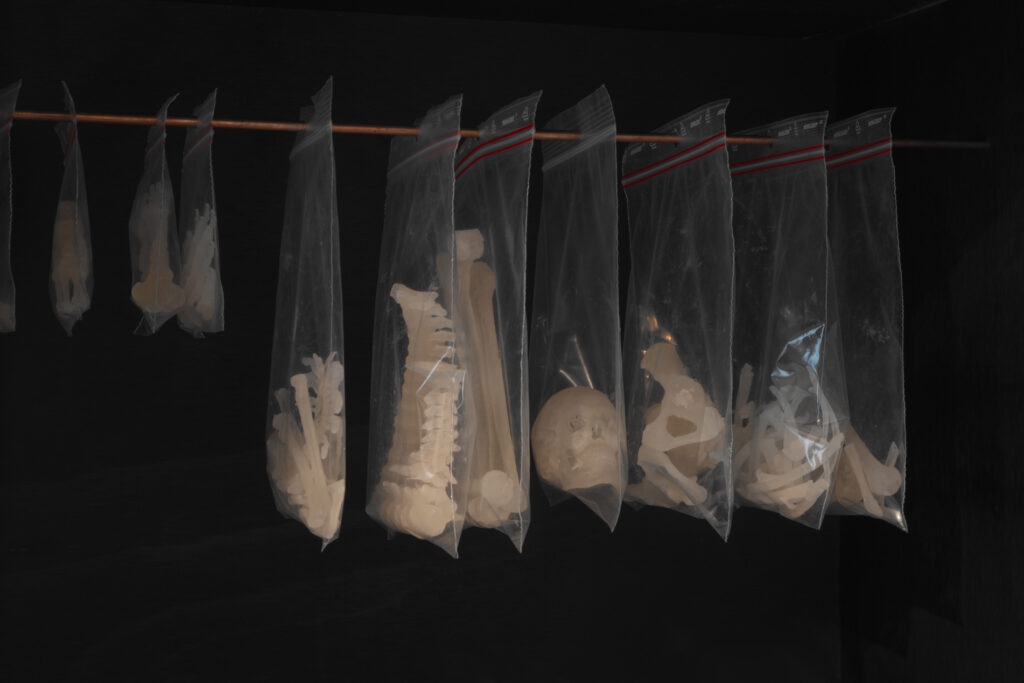
Grow box / Self-Portrait 39
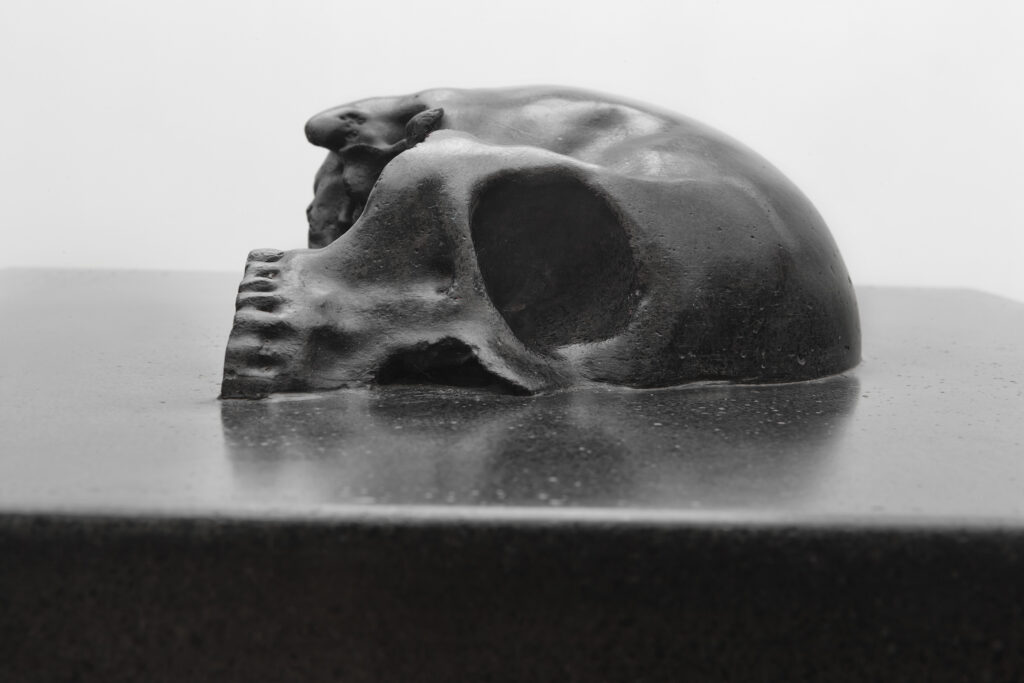
Plinth Portrait / Self-Portrait 29
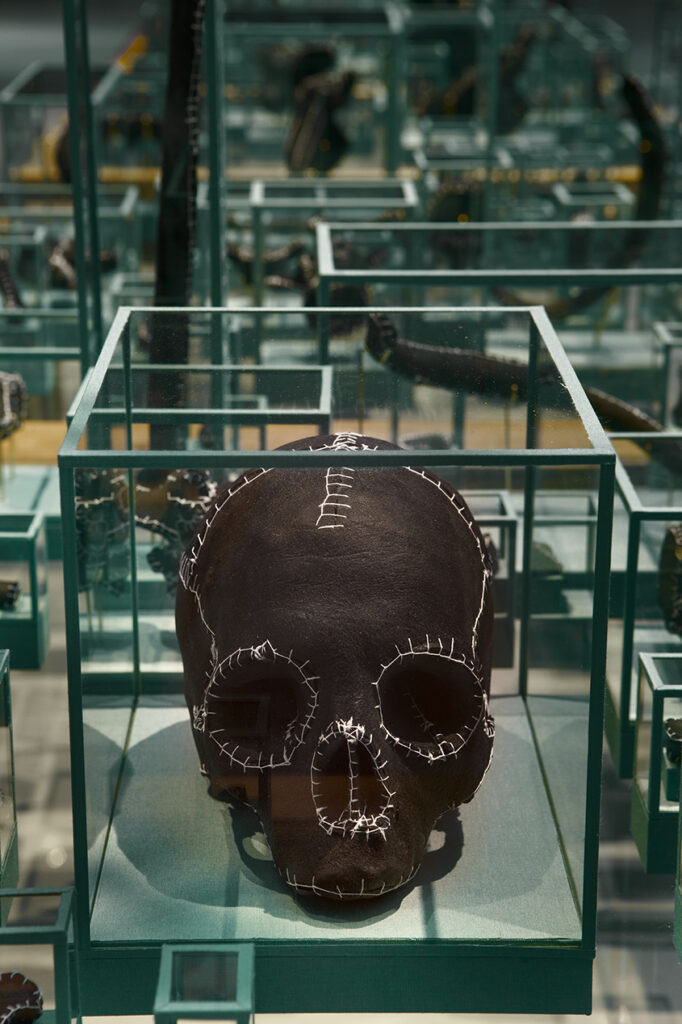
Skin and Bone / Self-Portrait 24
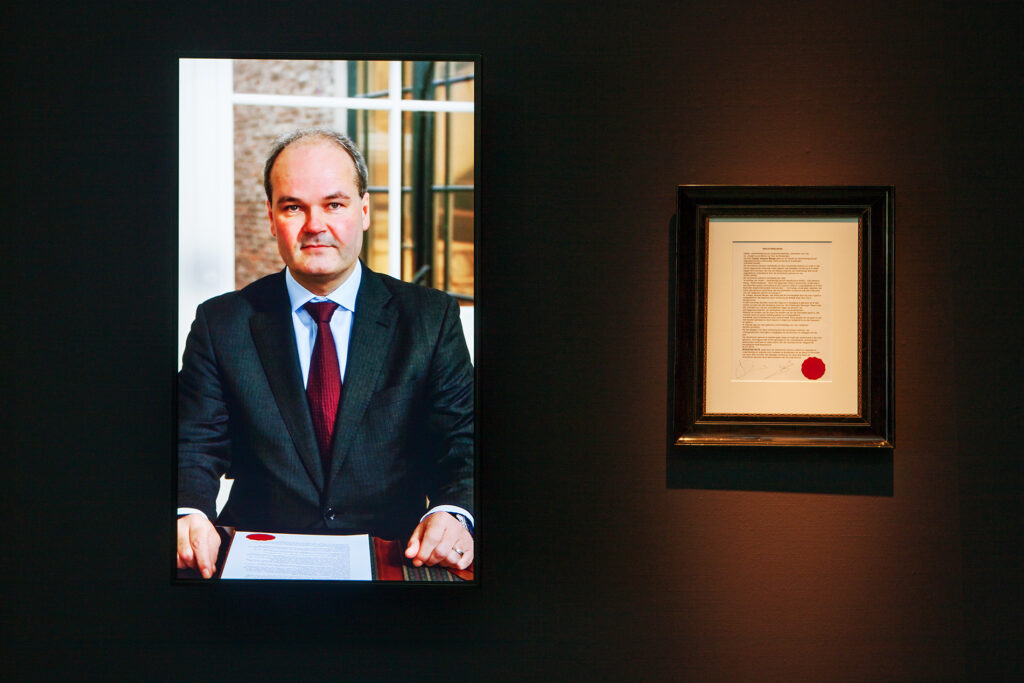
Declaration of Sanctity / Self-Portrait 23
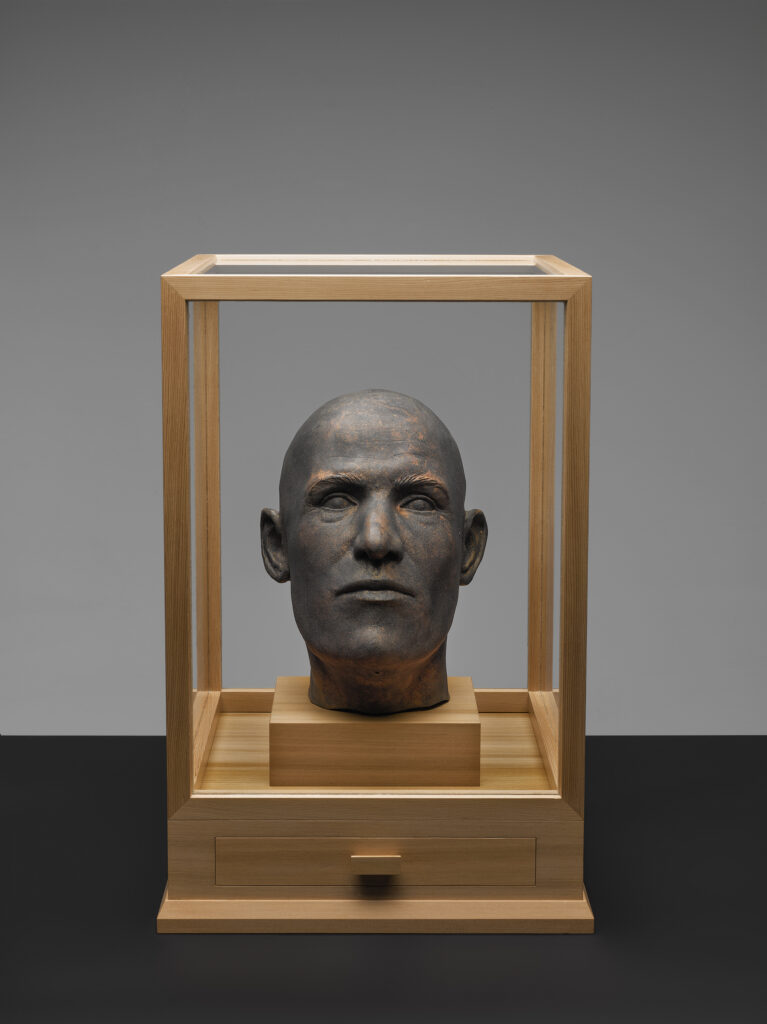
Skeleton / Self-Portrait 21